Bus Crashes, Crash Investigation and Preventative Measures
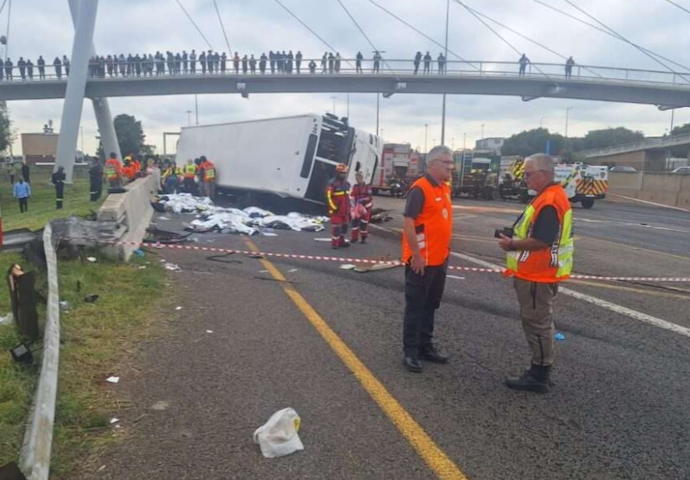
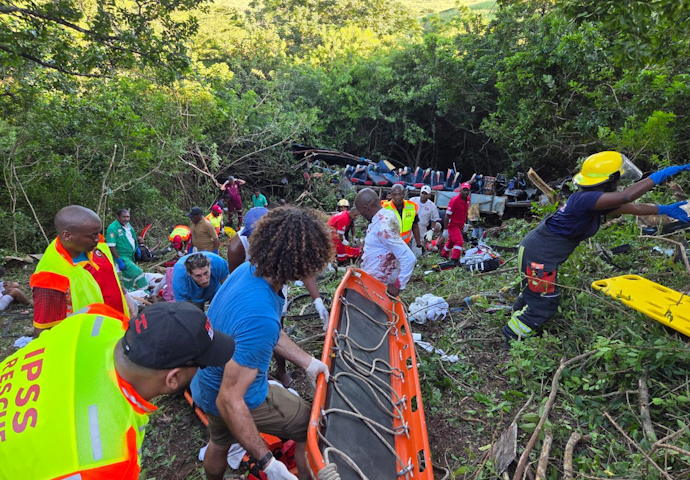
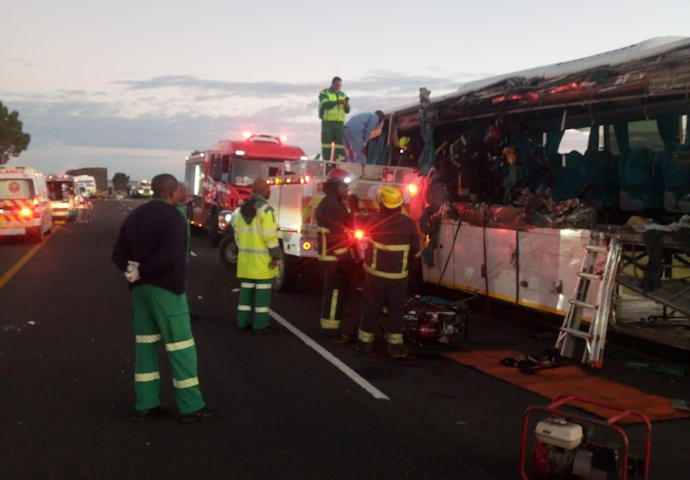
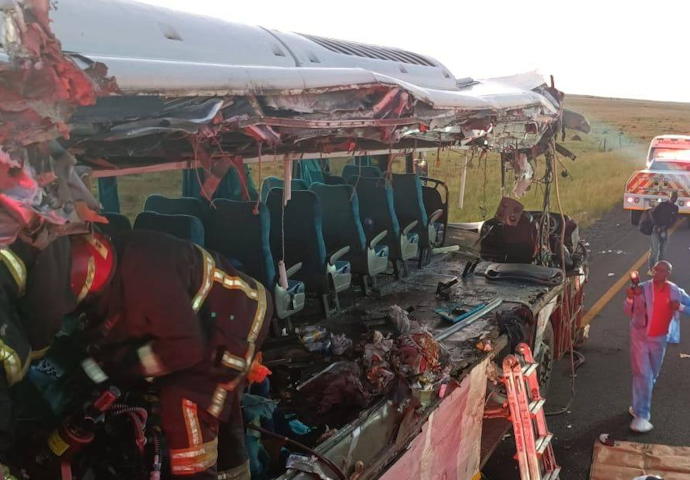
South Africa has, in recent years, experienced a persistent and troubling increase in road fatalities involving buses and their passengers. Within short periods, clusters of severe bus crashes have occurred across multiple provinces, including KwaZulu-Natal, the Free State, and Gauteng. These incidents raise a critical question: are such events merely coincidental, or do they reflect systemic and preventable failures within the commercial passenger transport sector?
From a crash investigation perspective, patterns emerge with sufficient regularity to dispel the notion of coincidence. When examined against established principles of road safety, engineering, human factors, and regulatory oversight, many of these crashes share common contributing elements.
Primary Contributing Factors in Bus Crashes
Based on extensive experience investigating thousands of collisions, including a significant number involving buses, three dominant contributors recur consistently: speed, vehicle condition, and driver conduct.
Speed, in the context of bus crashes, is seldom about excessive highway cruising speed alone. It more frequently manifests as inappropriate speed for conditions, particularly when negotiating bends, curves, interchanges, or descending gradients. Due to their high centre of gravity and mass distribution, buses are especially vulnerable to rollover when lateral acceleration exceeds design limits. Many serious bus crashes involve a rollover phase, which dramatically increases injury severity and fatality risk.
Mitigation measures are well established. These include advanced driver training focused on vehicle dynamics, the use of integrated vehicle telemetry systems linked directly to vehicle systems rather than satellite-only tracking, and the installation of inward- and outward-facing video systems. Dash-mounted video and telemetry introduce an element of continuous accountability that has been shown, both locally and internationally, to influence driver behaviour positively.
Poor maintenance remains a significant risk factor. Tyre failures, steering defects, and braking system malfunctions feature prominently in serious bus crashes. While South African law requires vehicles to be roadworthy, the practical reality is that compliance is often reduced to periodic, checklist-based inspections. Such inspections are ill-suited to detecting fatigue-related failures, progressive wear, or intermittent defects.
Effective mitigation requires a shift toward preventative maintenance regimes, supported by documented inspection protocols and unannounced roadside inspections. Rolling enforcement, conducted without prior notice, has consistently proven more effective than predictable compliance checks.
Driver error is rarely an isolated factor. Drivers are the first line of defence against mechanical failure and unsafe operating conditions. Decisions to exceed safe speeds, continue driving despite detectable mechanical anomalies, or operate while fatigued reflect systemic weaknesses in recruitment, training, monitoring, and organisational culture. Addressing this risk requires rigorous vetting, ongoing performance monitoring, enforceable disciplinary frameworks, and clear escalation protocols when safety is compromised.
Public Transport Infrastructure and Road Safety
South Africa lacks a fully integrated and functional public transport infrastructure outside limited metropolitan areas. Even within cities, many systems remain incomplete or poorly maintained. Unlike jurisdictions with mature transport networks—where public transport is spatially and operationally segregated from general traffic—South African buses share congested, deteriorating roadways with private vehicles, freight transport, and informal transport operators.
This mixed-traffic environment creates inherent conflict. It is not uncommon for a single roadway to carry multiple speed limits simultaneously: one for private vehicles, another for buses, another for heavy goods vehicles, and lower limits still for abnormal loads. Competition for space on substandard road surfaces significantly elevates risk, particularly for high-mass passenger vehicles.
Patterns Observed in Fatal Bus Crashes
Statistical analysis and case histories reveal several recurring patterns:
Long-distance intercity buses are disproportionately represented in fatal crashes compared to municipal or urban buses.
Extended driving hours and inadequate rest periods remain common, despite regulatory limits.
Unsafe driving behaviours—such as speeding, aggressive overtaking, and risk-taking—have become increasingly normalized.
Operational pressures frequently override safety considerations, with maintenance deferred to maintain service schedules and revenue.
Accountability mechanisms for both drivers and operators are inconsistently applied.
These patterns mirror findings in multiple jurisdictions and are consistent with established human factors research on fatigue, risk normalization, and organisational safety drift.
Adequacy of Current Safety Standards
The effectiveness of existing safety standards must be assessed by outcomes. Fatal bus crashes continue to occur with alarming regularity, suggesting that the regulatory framework, as implemented, is insufficient. A system that relies primarily on annual roadworthiness certification and reactive enforcement cannot reasonably be expected to manage the dynamic risks inherent in commercial passenger transport.
Rather than imposing increasingly punitive measures alone, a more refined regulatory approach is required—one that combines enforceable standards with incentives for compliance and industry-specific risk management strategies.
By comparison, commercial transport regulation in the United States is governed by a detailed and risk-based framework administered under federal oversight. While jurisdictions differ, the underlying principles—continuous compliance, data-driven enforcement, and operator accountability—are instructive and adaptable to local conditions.
The Role of Driver Training
Driver training is indispensable, but its effectiveness depends on scope and context. Drivers arrive in the industry with vastly different life experiences, exposure to risk, and ingrained driving cultures. Traditional training models, focused narrowly on vehicle operation and regulatory compliance, are inadequate to address these deeper influences.
Effective training must engage broader competencies, including risk perception, hazard anticipation, decision-making under pressure, and fatigue management. Safety culture does not develop in a single induction course. It evolves through sustained reinforcement, organisational leadership, and consistent consequences for unsafe conduct.
Certain unsafe practices—such as habitual speeding or overloading—often become entrenched within specific operational environments. Once normalized, these behaviours are difficult to reverse without decisive intervention.
Responsibilities of Government and Private Operators
Private bus operators should adopt holistic risk mitigation programmes that address safety as a system rather than a series of isolated compliance tasks. Such programmes should encompass:
Driver selection, monitoring, and behavioural profiling.
Continuous skills development and performance assessment.
Clear operational expectations supported by enforceable policies.
Corporate safety culture, including awareness of unsupervised driver behaviour.
Vehicle condition management, including known design limitations and failure modes.
Operational risk exposure, including road conditions, criminal threats, and environmental hazards.
Where internal capacity is limited, the engagement of independent specialists to assess risk exposure and develop tailored mitigation strategies is often the most effective starting point.
Government, for its part, must shift emphasis from revenue-driven enforcement toward visible, real-time safety interventions that directly influence behaviour and vehicle condition.
Public Awareness and Passenger Involvement
Passengers should not bear responsibility for operational safety. However, structured feedback mechanisms—such as clearly displayed reporting channels for unsafe driving—can serve as behavioural deterrents when implemented responsibly. Such systems must be carefully managed to prevent abuse and ensure that reports are assessed objectively.
Public awareness efforts are most effective when they empower passengers with information and transparency, rather than shifting accountability away from operators and regulators.
Technology as a Safety Enabler
Modern technology offers substantial opportunities to reduce risk. High-frequency vehicle telemetry, integrated video recording systems, geofencing, speed-limiting technologies, and driver feedback platforms all contribute to improved oversight and early risk detection. When deployed as part of a coherent safety framework, these systems provide measurable reductions in collision rates and severity.
Road Conditions and Environmental Factors
While poor road conditions, weather, and inadequate signage can contribute to crashes, they are seldom the primary cause in the most severe bus incidents investigated to date. The majority of catastrophic bus crashes are driven by human and mechanical factors rather than road design alone. This does not diminish the importance of infrastructure maintenance, but it underscores where intervention is likely to yield the greatest safety benefit.
Bus crashes are not inevitable. They are the predictable outcome of identifiable and addressable risks. Meaningful reduction in fatalities will require a coordinated commitment to accountability, data-driven enforcement, cultural change, and the systematic application of known preventative measures.